Gardening  Blogs - BlogCatalog Blog Directory
propagating perennials
Undergoing MyBlogLog Verification

Friday, March 14, 2008

Berms

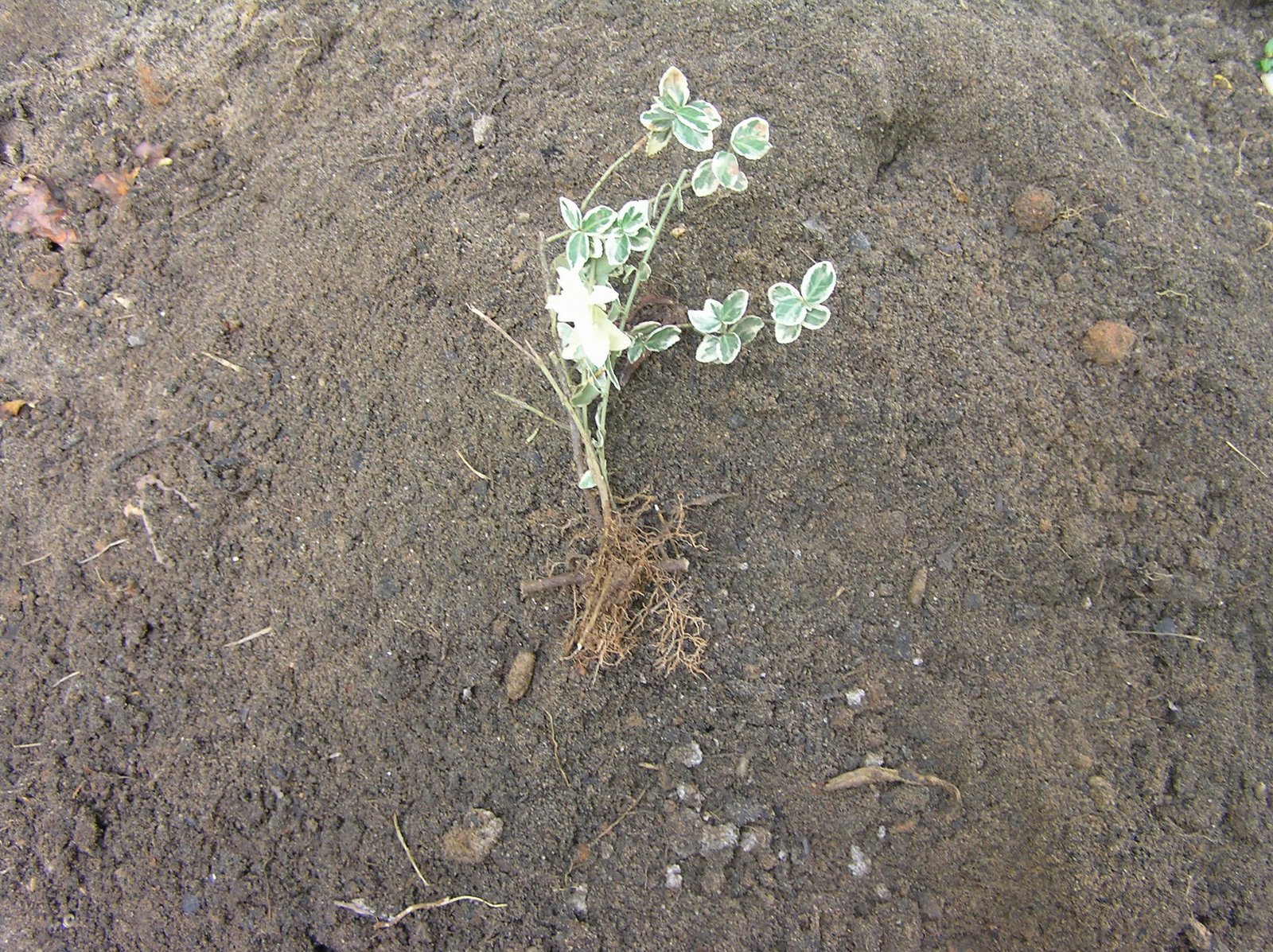
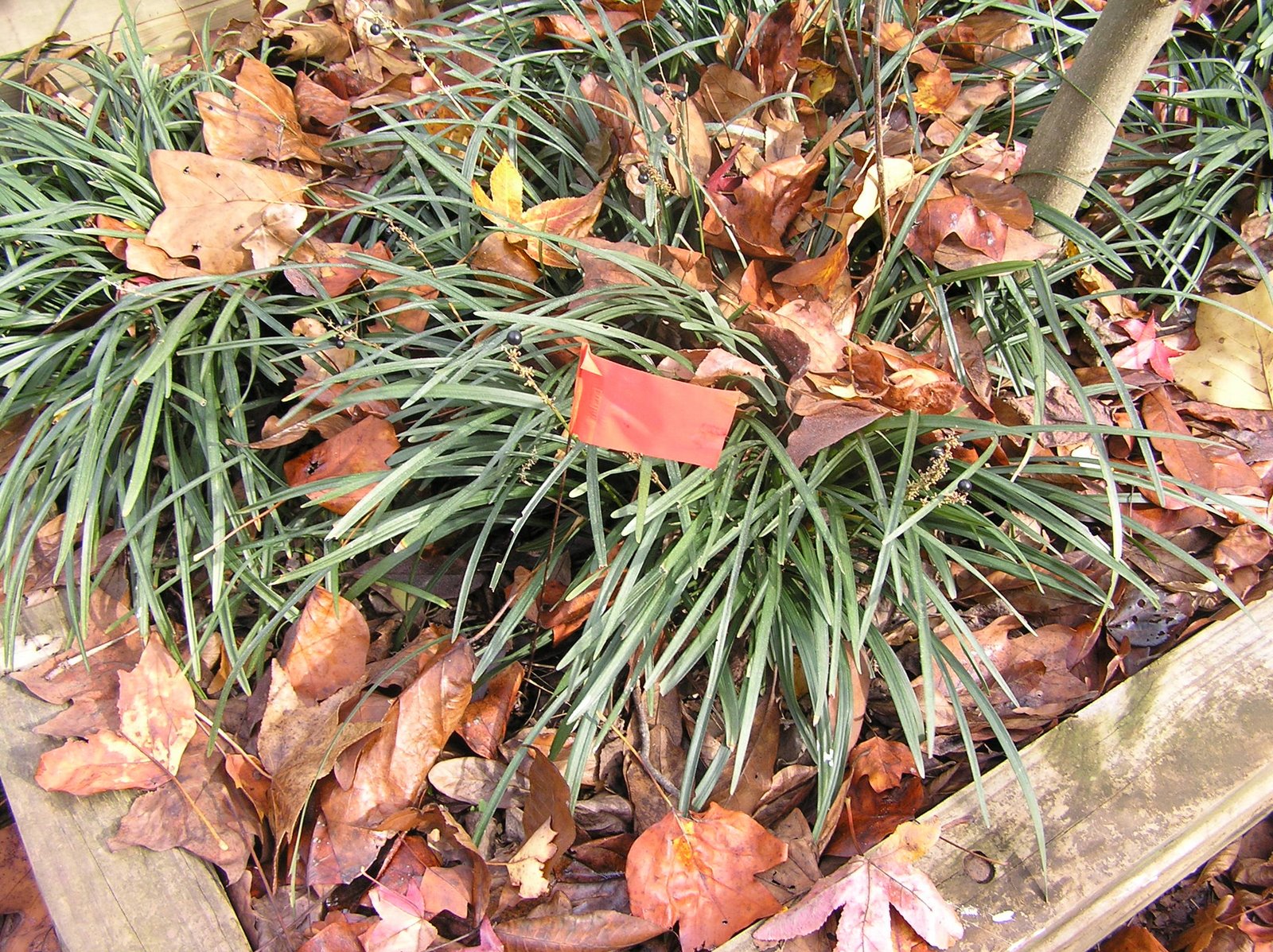
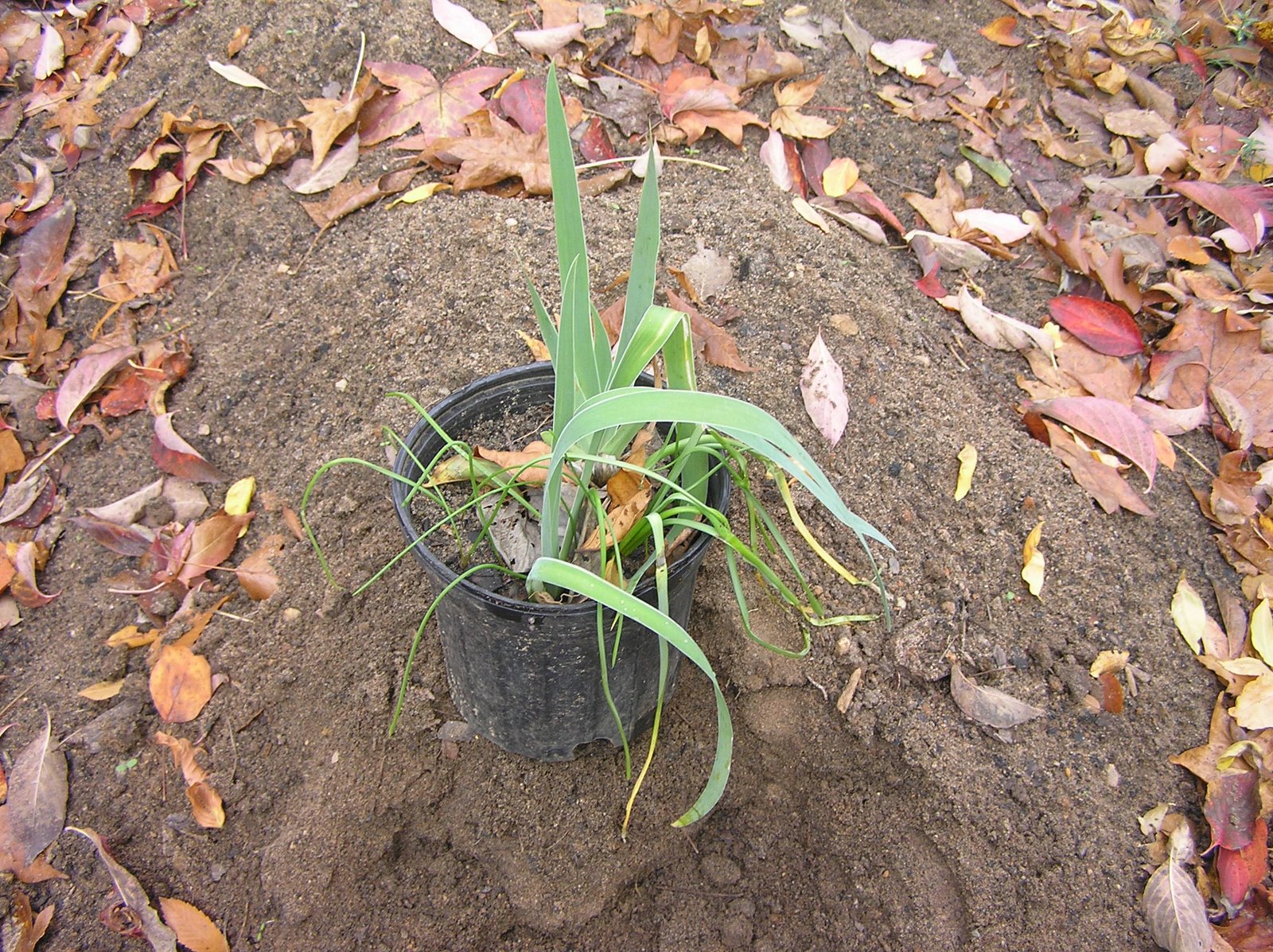
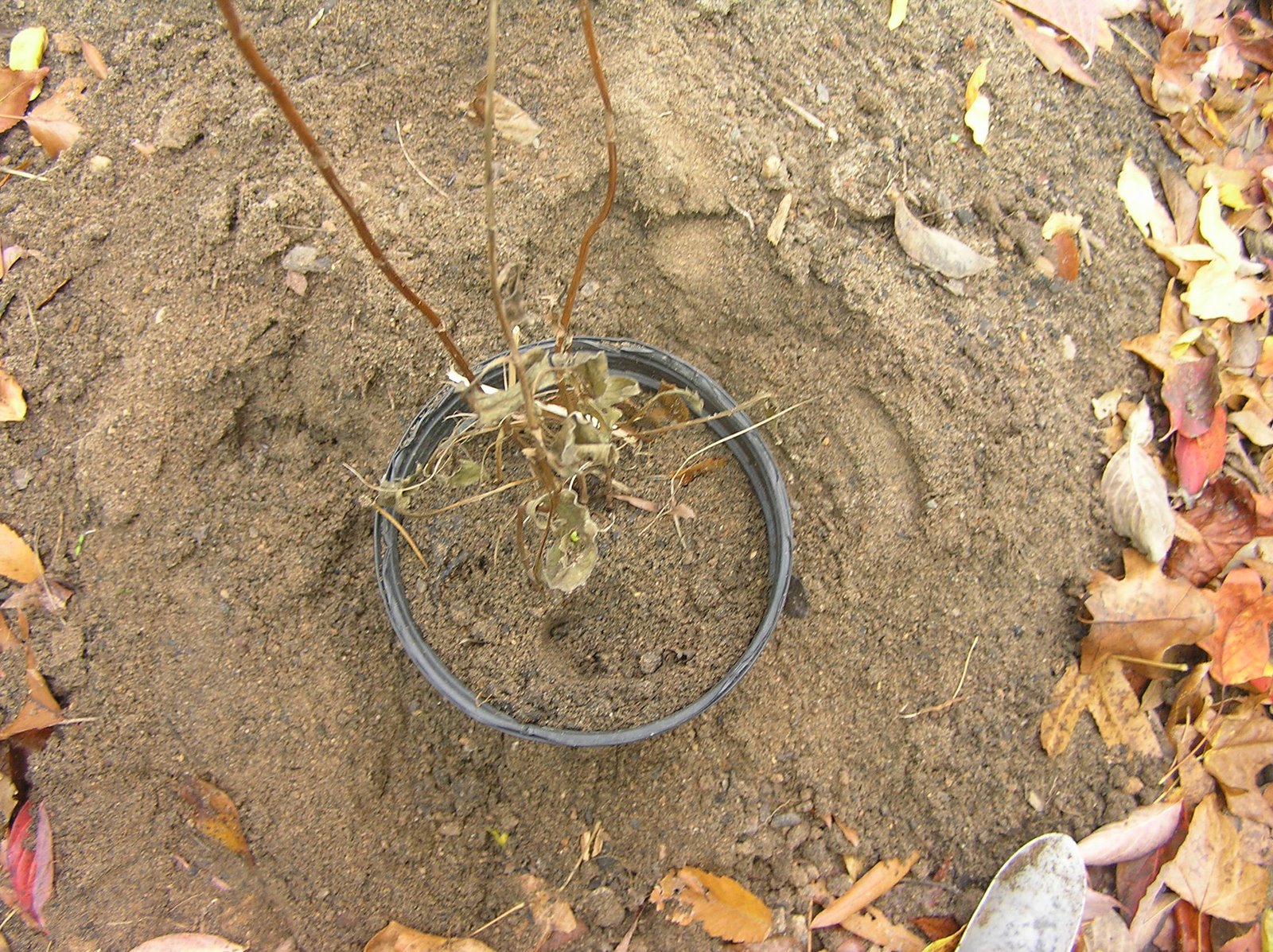
Some people want to build berms, primarily for screening purposes, but worry about the plant material being stabilized. When I did design/build in Colorado, depending on the client, the house, and the yard I tried to bring the mountains down to the suburbs, by creating berms with moss rock and boulders, aspen and firs, along with a mix of perennials and woody plant ground covers. The first thing a person should do is to lay out the berm circumference with lime, then start digging up the sod and turn it over with the grass facing downward. Then add topsoil, but it doesn’t have to be screened nor does it need to be compost. Adding manure and bone meal when planting will give the plants a good start in any garden bed. As the soil is added tamp it down either by walking on it or by using a tamper. I presume the plant material has been laid out in advance. I always put at least one fir and multiple stemmed aspen in the berm. To secure the plants from being blown over or from being staked, which look out of place in a landscape, I used 1/4" rebar and pound it through the root ball, wet it first, until you hit solid ground. A four foot section should be sufficient. That will stabilize the plants in the wind, because the one gallon container plants will not need staking. Take into consideration the growth habits of the ground covers, you don’t want the plants to be crowded after a year. I used wood bark mulch to cover the bed and it seems everyone in Colorado has a sprinkler system hooked up, so I didn’t need to worry about the garden beds getting ample water. I also added lighting fixtures and not the 12 volt kind either. In some jurisdictions they require the wire be enclosed in conduit. The design of the berm should resemble an amoeba, flowing and sweeping lines that tie into other parts of the landscape plan, but nothing tight because the grass still needs to be mowed freely. I used to drive the sprinkler people crazy because they like things in straight lines, but were mountain ranges formed in straight lines?

Wednesday, March 12, 2008

Now what?

Is salvia the next marijuana?
By JESSICA GRESKO, Associated Press Writer
On Web sites touting the mind-blowing powers of salvia divinorum, come-ons to buy the hallucinogenic herb are accompanied by warnings: "Time is running out! ... stock up while you still can."
That's because salvia is being targeted by lawmakers concerned that the inexpensive and easy-to-obtain plant could become the next marijuana. Eight states have already placed restrictions on salvia, and 16 others, including Florida, are considering a ban or have previously.
"As soon as we make one drug illegal, kids start looking around for other drugs they can buy legally. This is just the next one," said Florida state Rep. Mary Brandenburg, who has introduced a bill to make possession of salvia a felony punishable by up to five years in prison.
Some say legislators are overreacting to a minor problem, but no one disputes that the plant impairs judgment and the ability to drive.
Native to Mexico and still grown there, salvia divinorum is generally smoked but can also be chewed or made into a tea and drunk.
Called nicknames like Sally-D, Magic Mint and Diviner's Sage, salvia is a hallucinogen that gives users an out-of-body sense of traveling through time and space or merging with inanimate objects. Unlike hallucinogens like LSD or PCP, however, salvia's effects last for a shorter time, generally up to an hour.
No known deaths have been attributed to salvia's use, but it was listed as a factor in one Delaware teen's suicide two years ago.
"Parents, I would say, are pretty clueless," said Jonathan Appel, an assistant professor of psychology and criminal justice at Tiffin University in Ohio who has studied the emergence of the substance. "It's much more powerful than marijuana."
Salvia's short-lasting effects and fact that it is currently legal may make it seem more appealing to teens, lawmakers say. In the Delaware suicide, the boy's mother told reporters that salvia made his mood darker but he justified its use by citing its legality. According to reports, the autopsy found no traces of the drug in his system, but the medical examiner listed it as a contributing cause.
Mike Strain, Louisiana's Agriculture and Forestry Commissioner and former legislator, helped his state in 2005 become the first to make salvia illegal, along with a number of other plants. He said the response has been largely positive.
"I got some hostile e-mails from people who sold these products," Strain said. "You don't make everybody happy when you outlaw drugs. You save one child and it's worth it."
An ounce of salvia leaves sells for around $30 on the Internet. A liquid extract from the plant, salvinorin A, is also sold in various strengths labeled "5x" through "60x." A gram of the 5x strength, about the weight of a plastic pen cap, is about $12 while 60x strength is around $65. And in some cases the extract comes in flavors including apple, strawberry and spearmint.
Web sites such as Salviadragon.com tout the product with images like a waterfall and rainbow and include testimonials like "It might sound far fetched, but I experience immortality."
Among those who believe the commotion over the drug is overblown is Rick Doblin of the Multidisciplinary Association for Psychedelic Studies, a nonprofit group that does research on psychedelic drugs and whose goal is to develop psychedelics and marijuana into prescription medication.
"I think the move to criminalize is a misguided response to a very minimal problem," Doblin said.
Doblin said salvia isn't "a party drug," "tastes terrible" and is "not going to be extremely popular." He disputes the fact teens are its main users and says older users are more likely.
"It's a minor drug in the world of psychedelics," he said.
Moreover, it's hard to say how widespread the use of salvia is. National and state surveys on drug use don't include salvia, and because it is legal in most states, law enforcement officials don't compile statistics, either.
San Diego State University last year surveyed more than 1,500 students and found that 4 percent of participants reported using salvia in the past year.
Brandenburg's bill would make salvia and its extract controlled substances in the same class as marijuana and LSD.
Florida state Sen. Evelyn Lynn, whose committee plans to study the salvia bill Tuesday, said the drug should be criminalized.
"I'd rather be at the front edge of preventing the dangers of the drug than waiting until we are the 40th or more," she said.
Copyright © 2008 The Associated Press. All rights reserved. The information contained in the AP News report may not be published, broadcast, rewritten or redistributed without the prior written authority of The Associated Press.

Monday, March 10, 2008

Grey water

Everyone perceives life from a different perspective which is why when someone asks a loaded question they get various opinions, each one right from the person giving their opinion. However landscape design should be functional, easy on the eyes, and simple to maintain. In some regions sprinkler systems make a homeowners task much easier, however wasting a resource not everyone in the world takes for granted, is selfish, because if proper procedures were in place initially draconian measures would not now be a necessity. In the Southeast we are now facing a drought and the State of Georgia is even attempting to annex a mile of Tennessee along its border, because located within that mile is a reservoir, and only now are people scrambling to collect water from gutters and as demand exceeds supply “rain barrels” are soaring in price, however how easy would it be to collect grey water from showers, upwards of 50 gallons are used per shower, upwards of 50 gallons to wash clothes, an expensive process, complicated by the fact that not everyone has the wherewithal to initiate the process. I plan on relocating to Colorado, once I sell my existing home, and I am planning to use grey water extensively, because rainfall averages are in stark contrast to the average rainfall in the Carolinas, because my household water will be gathered from a well and since wells run dry, learned from previous experiences, I am gathering information on craigslist.com for people selling any type of water containers in CO, because I’ll also have a septic tank and I’ve learned they are not the most reliable collection process for waste water. Here is some information on grey water: http://en.wikipedia.org/wiki/Greywater. There are many commercial alternatives in the market place today. One commercial process saves grey water then uses that to flush a toilet, upwards of 30 gallons per flush, and then in turn treats that water to be used in the garden. I have no clue of the cost, but will the plumber you hire have a clue, because few professionals try to learn about alternatives. I hired a plumber when my water bill shot up only to learn that I had a leak in the line, but also asked him to replace a washer in a spigot that was leaking, then the following year the spigot leaked. I could have done that myself it I had a “key.” Americans seem to be too “busy” to want to learn about alternatives and then rely on others who are also lazy. After clearing my lot in Franklin County, NC, I planted plants raised either by propagation or from seedlings, and whenever I went up I’d try to water as much as possible and on a recent trip I noticed how some of the plants took off in a drought. There is no water supply on the lot and left much of the watering to Mother Nature and they blossomed, because I didn’t take shortcuts when planting. Here are some facts supplied by bracgreywater.com:
97% of the earth’s water is ocean salt water. The remaining 3% is fresh water but two thirds of this fresh water is frozen in the polar ice caps leaving only 1% available for human consumption.
There is the same amount of water on earth as there was when the earth was formed billions of years ago.
The water that you are using today could contain molecules that the Neanderthals drank. At about 150 gallons per person daily, the United States uses more water than any other country in the world. Europeans use about 53 gallons per day and Africans only about 6 gallons per day.
Over a typical 100 year span, a water molecule spends 98 years in the ocean, 20 months locked in ice, about 2 weeks in lakes and rivers, and less than a week in our atmosphere.
It can take a whole lifetime for groundwater to travel just one mile.
Water regulates the earth's temperature.
Frozen water (ice) is 9% lighter than water (this is why ice floats on water).
A gallon of water weighs about 8.33 pounds.
Water is considered "saline" (salt water) and undrinkable after as little as one part salt is added to one thousand parts of fresh water. If the entire world's water were able to fit into a one gallon bucket, the fresh water available for us to use would equal only about one tablespoon.
One cubic mile of water equals over 1.1 Trillion gallons. The earth contains about 344,000,000 cubic miles of water and exists as follows:
• 315,000,000 cubic miles – salt water in the ocean • 9,000,000 cubic miles - groundwater in aquifers • 7,000,000 cubic miles - frozen in polar ice caps • 53,000 cubic miles of water is passing through lakes and streams • 4,000 cubic miles of water is atmospheric moisture • And 3,400 cubic miles of water are locked within living things. For example:
66% of the human body is water (about 10 gallons). 75% of our brain is water. 25% of the bone in our body is water. 83% of the blood in our body is water. 75% of a chicken is water. 80% of a pineapple is water. 95% of a tomato is water. 70% of an elephant is water.
Over 90% of the world's supply of fresh water is located in Antarctica.
Each day the sun evaporates a trillion tons of water.
A single average size tree will give lose 70 gallons of water per day to evaporation.
An acre of corn will lose 4,000 gallons of water per day to evaporation.
A small drip from a faucet can waste as much as 20 gallons of water a day.
A person can live about a month without food, but only about a week without water.
A person must consume the equivalent of about five and one half 12 ounce bottles of water daily to live healthily - an average of 20,000 gallons of water during their life.
More than 2 billion people on earth do not have a safe supply of fresh water.
Water leaves the stomach five minutes after consumption.
Two thirds of the water used in a home is used in the bathroom.
To flush a toilet we use 2 to 7 gallons of our fresh drinking water - the single greatest water user inside our home.
A five-minute shower uses 25 to 50 gallons of water. Contrary to what you may think, a bath uses less water than a typical shower.
Brushing your teeth uses about 2 gallons of water.
An automatic dishwasher uses 9 to 12 gallons of water.
A washing machine will use 20 to 50 gallons of water for each load of clothes.
At least 400 million people live in regions with severe water shortages and the number is growing exponentially. Most of the world's people must walk at least 3 hours to fetch their fresh water.
Freshwater animals are disappearing five times faster than land animals.
It takes 1 gallon of water to process one bottle of beer.
It takes 120 gallons of water to produce one egg.
It takes 132 gallons of water to grow one orange.
Processing one chicken requires 11.6 gallons of water.
Processing one can of fruit or vegetables requires 9.3 gallons of water.
The amount of water required to grow just one day's food for a typical family of four is about 6,800 gallons.
It takes 1,850 gallons of water to refine one barrel of crude oil and double that to produce one gallon of ethonal.
The average size car required 39,000 gallons of water to manufacture.
It took 2,072 gallons of water to make the four tires on your car.

Friday, March 7, 2008

Composting

I’ve read a lot about composting since I have been doing it for years. When I had a farmette in Upstate New York I raised chicken, pigs and Black Angus and bred them as well. The hardest part was when it came time to butcher so I had a neighbor come in and handle that aspect, but I will say the meat was better then what we can buy in stores especially today with all the hormones that are feed to livestock to fatten them up faster and why the USDA had to lower their standards years ago. I had plenty of manure to compost, but I also had a small area where horse radish grew naturally, what most gardeners die to possess, silty loam, so I wasn’t desperate for good garden soil, just to find good help to pick the crops, since I was self-employed with employees and was on the road a lot. Circumstances change when a person moves from the country to the city. Little manure is to be found. The house I purchased had fencing around the front of the property for their animals, which I took down, and since I am always looking for ways to reuse materials, I used that fencing to create my first compost pile, but after a few years raccoons were starting to visit, eventually I discarded my corn cobs in the trash, until one day I visited the local Smith and Hawken, owned by Scott’s, http://smithandhawken.resultspage.com/search?p=Q&ts=v3&w=composter, store and there I found what has turned out to be the best composting product that came to market. Plastic, but can be broken down. In California cities give them to homeowners at a discount to cut back on trash removal. One thing that always bothered me with composting were the egg shells. When I used the trenching method they would surface years later. Then an idea popped into my head. Why not use a blender to give the worms a head start. Wow, the red wigglers in the summer are beyond belief, and I don’t fish. One day when I was in Bed, Bath & Beyond, I noticed a canister with a squeeze grip lid so I started putting my kitchen scraps into that and when it’s full I add water and dump it into my blender and after turning the compost I add that slop to the pile. It can smell pretty gross though. Imagine coffee grinds, pizza crust, egg shells, and pineapple skins. I’ve noticed the price on the composter has increased 30% since I purchased mine, but it is well worth the money.

Wednesday, March 5, 2008

FYI

I was doing some research on the ‘net and came upon these sites that I thought might be beneficial. I found out there is a dwarf weigela whose blooms are dark purple although last time I checked weigela was not a perennial. I know weigela blooms profusely but they get so leggy after a while. This site list states that offer internships. http://www.perennialplant.org/products.asp for those of you who have children or know someone that might be interested in horticulture.
This site has most everything you want to know about “perennials.” Drought resistance, colors, shade or sun, tall or short. http://www.perennials.com. I have been away from plant material for a while and have forgotten more than I retained, so I will use this site as I try to relearn what I’ve lost, because I go into forums and some of the plants seem strange and some of today’s practices seem out in left field, I guess because of “global warming” which is proving to be pie in the sky, except for coal fired electricity plants and private aircraft, both of which are beyond our control. Of course we all have plants that we dislike for one reason or another and plants that we cannot find locally that we know will grow in our yards. I remember I came upon some tree diggers that brought hemlock down from the mountains and everyone told me “it’s too hot” in Charlotte. I’ve had them for a dozen years and not one problem except for the neighbor’s vine that wanted to strangle them. Roundup on the sly cured that problem..

Tuesday, March 4, 2008

For anyone thinking of moving to the Raleigh, NC area

http://lakeroyalencfsbo.blogspot.com

Monday, March 3, 2008

Perwinkle

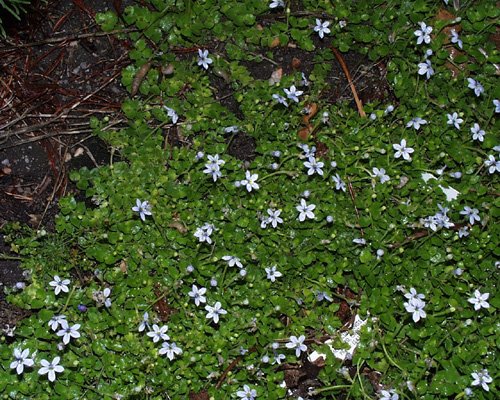
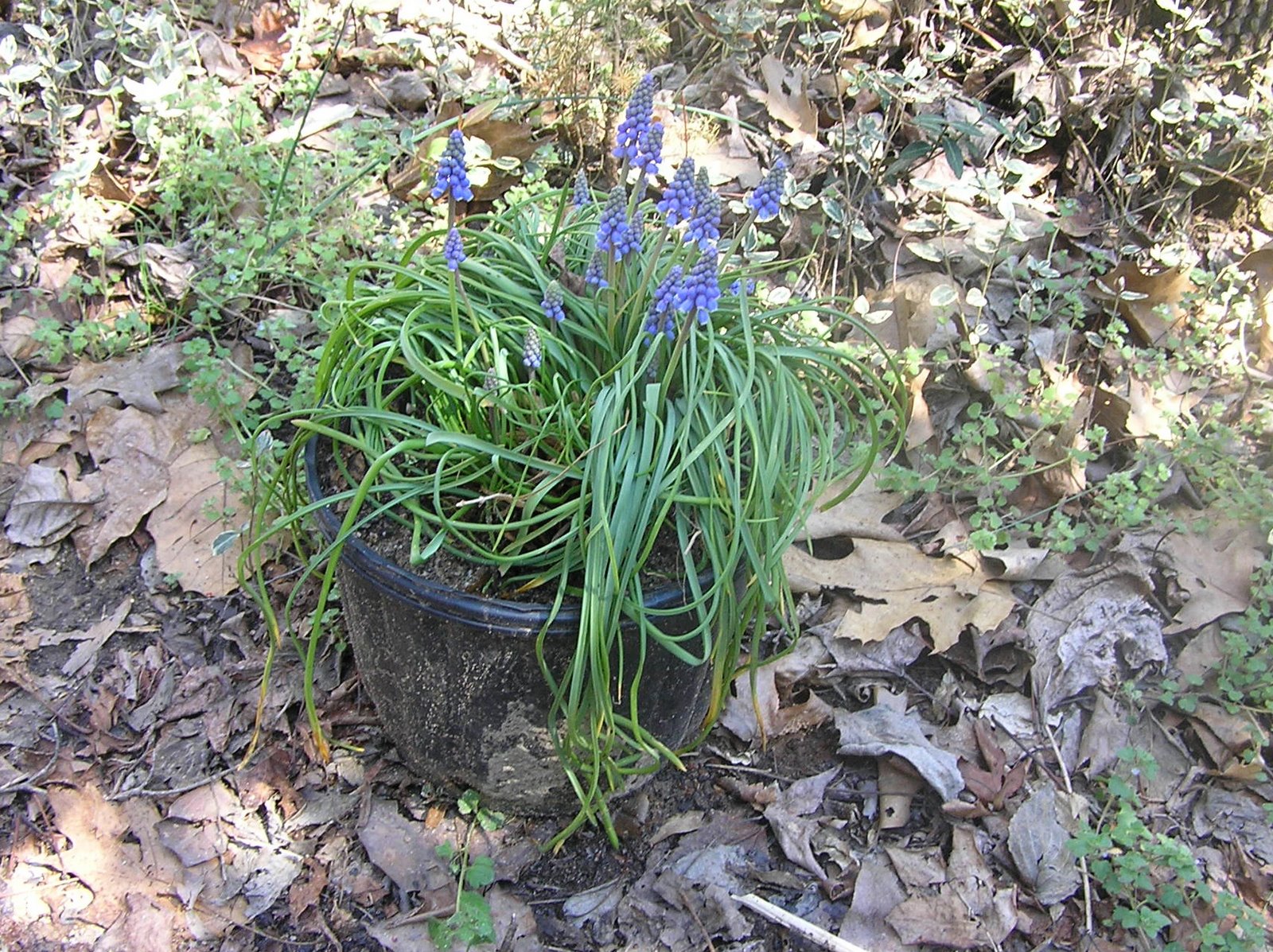
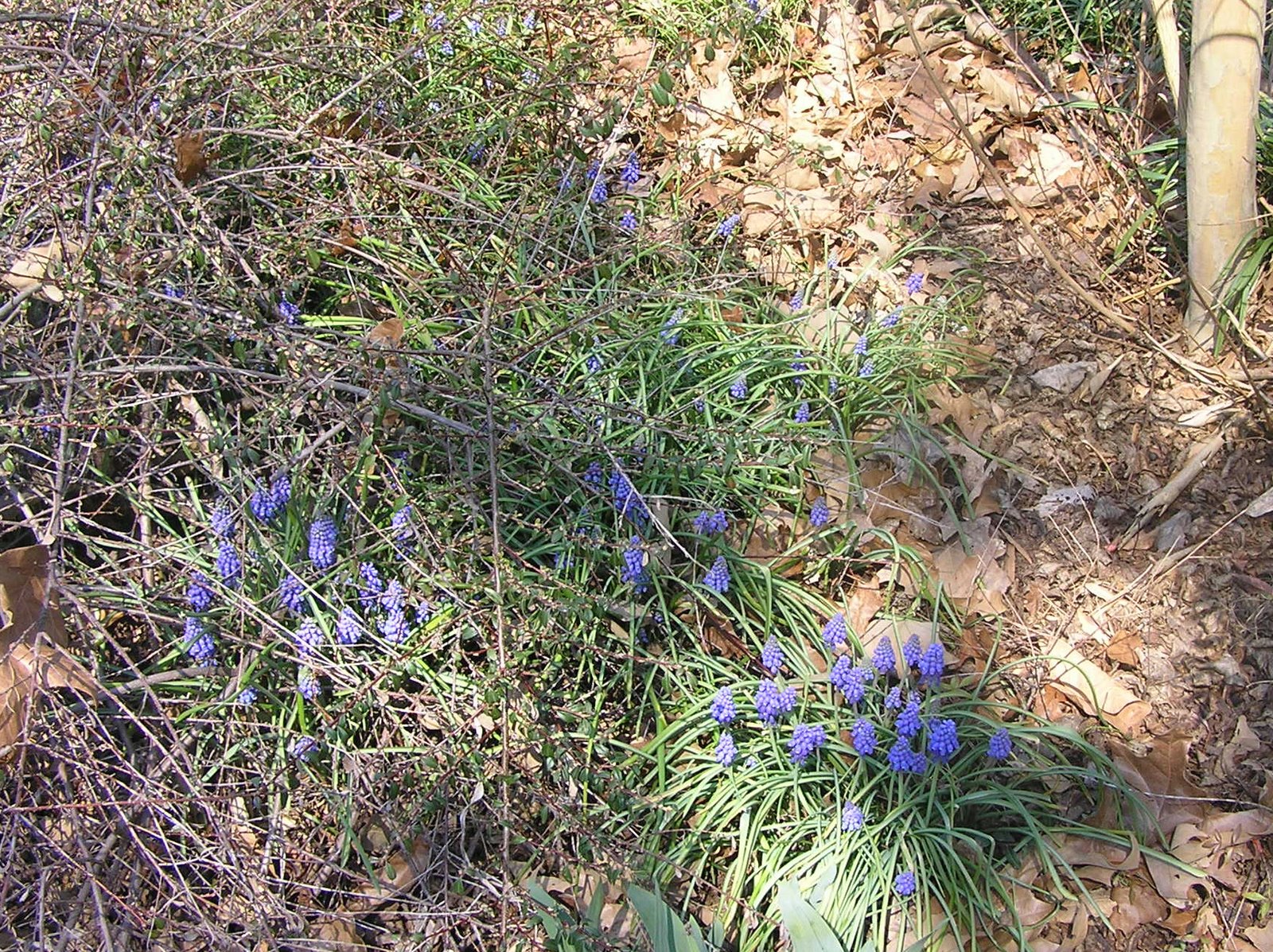
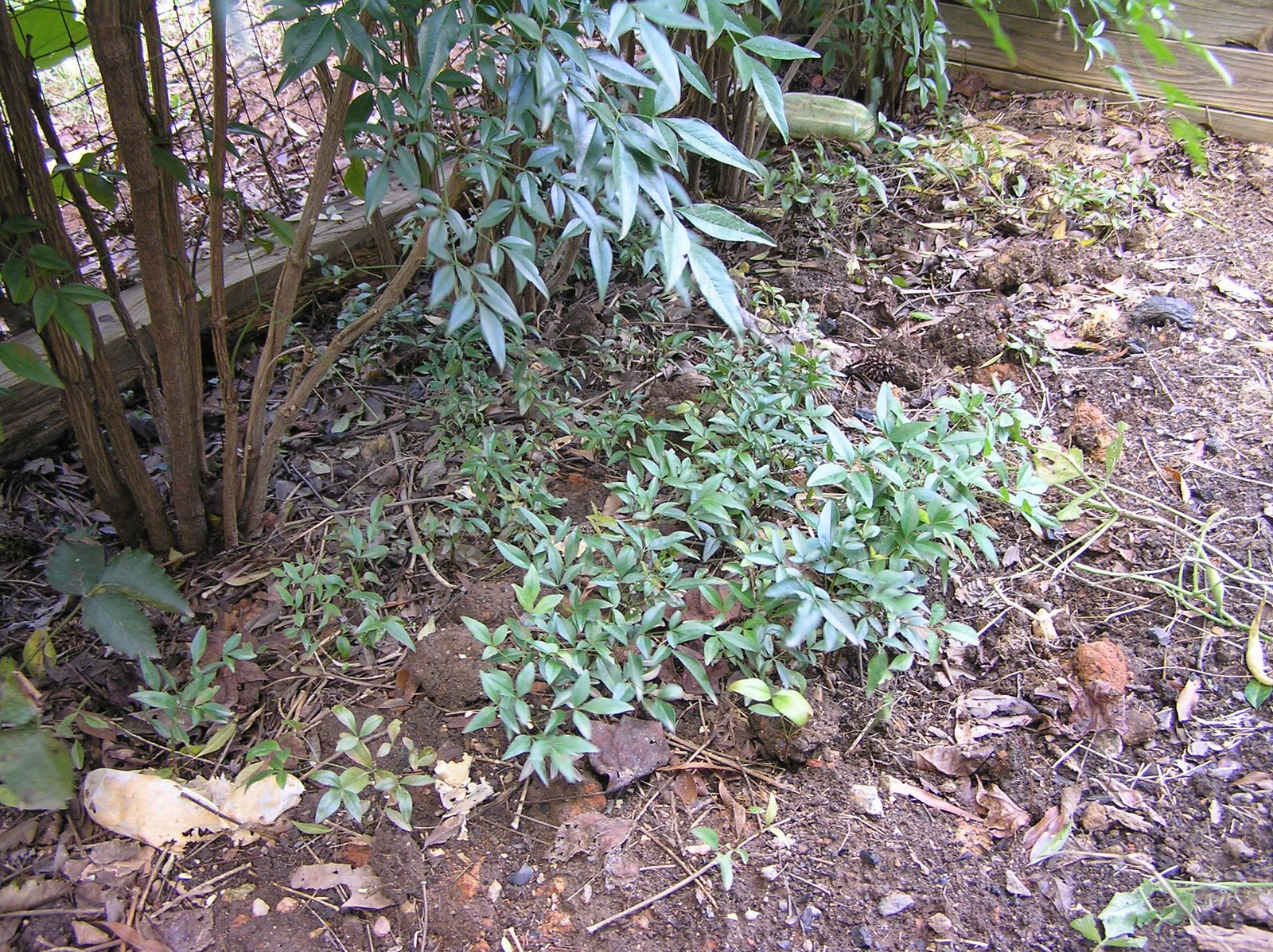
Another plant that is easily propagated for the woodland garden bed is Vinca Minor or Periwinkle. A bright blue flower appears in early spring on the evergreen plant and sporadically throughout the summer. The plant prefers moist soil which generally exists with an overhead canopy, but it can flourish in a bright sunny garden bed, but it will need water in order to become a healthy specimen. The procedure to rooting cuttings is similar to Phlox Subulata(below), because unless the soil is healthy roots aren’t found at every node, so there will be waste of greenery to gather cuttings to root. Gather 6 branches to obtain a healthy plant and cut back the tops to about 6 inches and strip off the bottom leaves. It will take six months to get a good root system, in a one gallon container, to transplant, but be sure to start cuttings before the new buds break or before flowering in late winter, because as you can see in the photo it is already flowering on March 1st, in Zone 7.
 
http://www.blogcatalog.com/directory/home_and_garden/gardening

web site counter
South Beach Diet